Why Reverse Osmosis

Understanding One of the Most Effective Water Filtration Methods Available
Water touches every part of your life.
You drink it.
You cook with it.
You wash your produce in it.
You give it to your family every single day.
Yet most people don’t really know what’s in their tap water — or what filtration method actually makes the biggest difference.
If you’ve been researching water systems, you’ve likely come across the term reverse osmosis (RO). It’s often described as one of the most advanced filtration technologies available.
But what does that actually mean?
And is it worth it?
Let’s break it down in simple, practical terms..
What Is Reverse Osmosis?
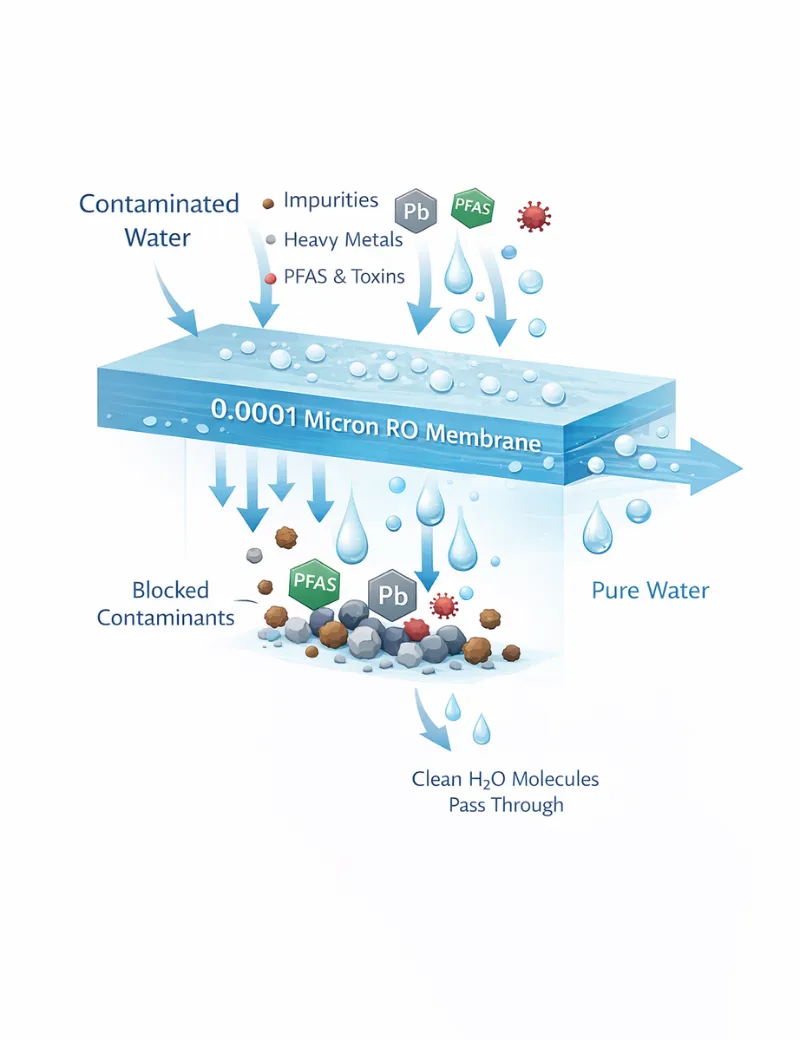
Reverse osmosis is a filtration process that uses a semi-permeable membrane to remove contaminants at a molecular level.
The membrane has microscopic pores — approximately 0.0001 microns in size.
To put that in perspective:
- A human hair is about 70 microns wide
- Bacteria are around 0.5–5 microns
- Many dissolved contaminants are far smaller
Reverse osmosis works by applying pressure to push water through this ultra-fine membrane, leaving unwanted substances behind.
The result? Highly purified water.
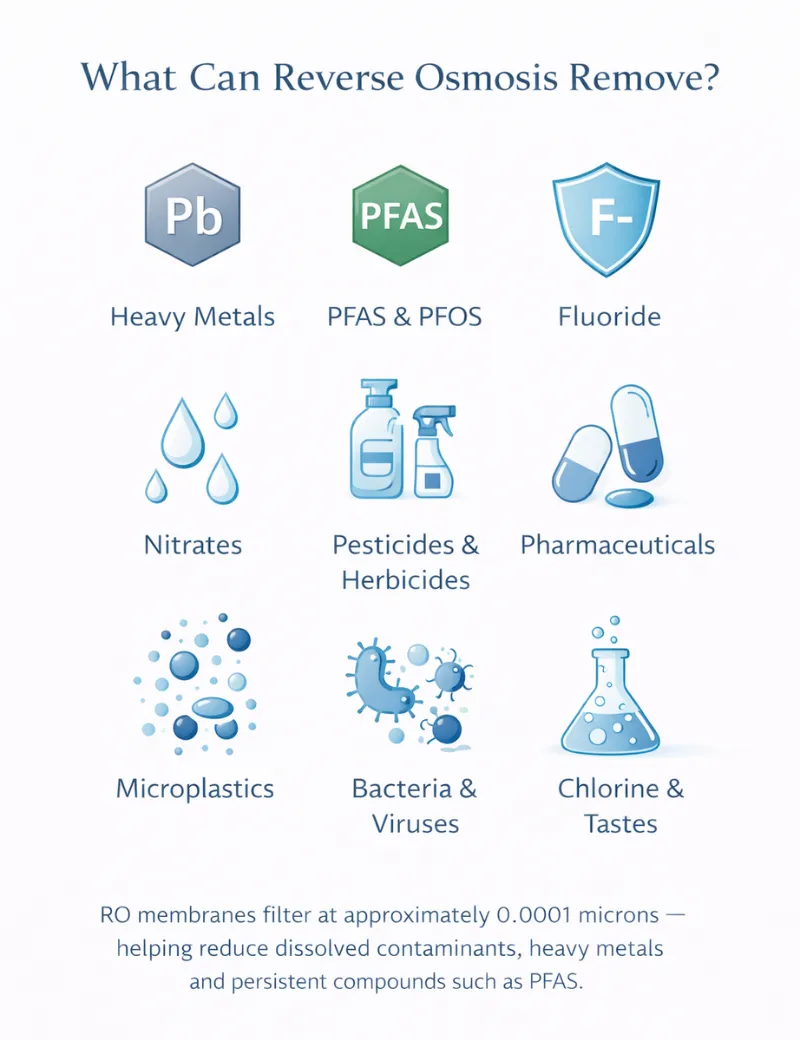
What Can Reverse Osmosis Remove?
While no system can claim to remove absolutely everything, properly designed RO systems are widely recognised for significantly reducing:
- Heavy metals (lead, mercury, arsenic)
- PFAS & PFOS (“forever chemicals”)
- Fluoride
- Nitrates
- Pesticides and herbicides
- Pharmaceutical residues
- Microplastics
- Bacteria and viruses
- Chlorine and unpleasant tastes
Because the membrane filters at such a fine level, reverse osmosis is often used in:
- Hospitals
- Laboratories
- Food production
- Commercial water treatment
It’s not just a household trend — it’s a globally trusted purification method.
Why This Matters for Health
Trace contaminants in drinking water are often measured in parts per billion or parts per trillion.
While regulatory standards exist, many people prefer to reduce exposure where possible — particularly when it comes to:
- Hormone-disrupting chemicals
- Persistent environmental pollutants
- Heavy metal accumulation
PFAS, for example, are known as “forever chemicals” because they do not easily break down in the environment and can accumulate in water supplies.
Reverse osmosis has been shown to be one of the most effective residential methods for reducing PFAS levels.
For families, children, and anyone wanting to reduce their overall chemical load, filtration becomes less about fear — and more about informed choice.

Does Reverse Osmosis Remove Minerals?
This is one of the most common questions.
Yes — reverse osmosis removes many dissolved minerals along with contaminants.
For some people, this is a benefit. For others, it raises questions.
It’s worth noting:
- The majority of essential minerals (such as calcium and magnesium) typically come from food, not water.
- Many households choose RO specifically for its ability to remove dissolved substances comprehensively.
Ultimately, the right system depends on your priorities — taste improvement, contaminant reduction, mineral retention, or a balance of all three.
The Difference Between RO and Standard Filters
Not all filters are the same.
Basic carbon filters improve taste and reduce chlorine. Reverse osmosis goes further by addressing dissolved contaminants at a molecular level.
If your primary goal is:
✔ Improving taste → carbon filtration may be sufficient
✔ Reducing dissolved contaminants → reverse osmosis is more comprehensive
Understanding this difference helps you choose the system that truly fits your needs.d, filtration becomes less about fear — and more about informed choice.
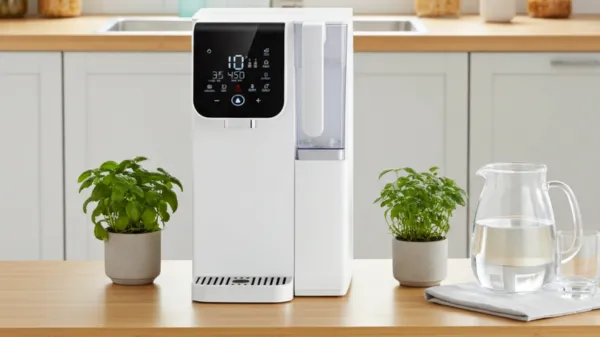
Modern Reverse Osmosis: Smarter & More Efficient
Older RO systems had drawbacks — bulky tanks and high water waste.
Newer systems (like modern direct-flow designs) have improved dramatically:
- Tankless technology
- Real-time TDS monitoring
- Improved water efficiency ratios
- Compact under-sink designs
- Faster flow rates
Today’s systems are more water-conscious, space-saving, and user-friendly than ever before.
Who Is Reverse Osmosis Best For?
Reverse osmosis may be a strong choice if you:
- Want comprehensive contaminant reduction
- Live in an area with water quality concerns
- Prefer highly purified water for drinking and cooking
- Want to reduce exposure to PFAS and dissolved chemicals
- Are seeking long-term peace of mind
It’s particularly popular among:
Offices and hospitality settings
Health-conscious families
Wellness-focused households
Homes using bore or variable-quality water
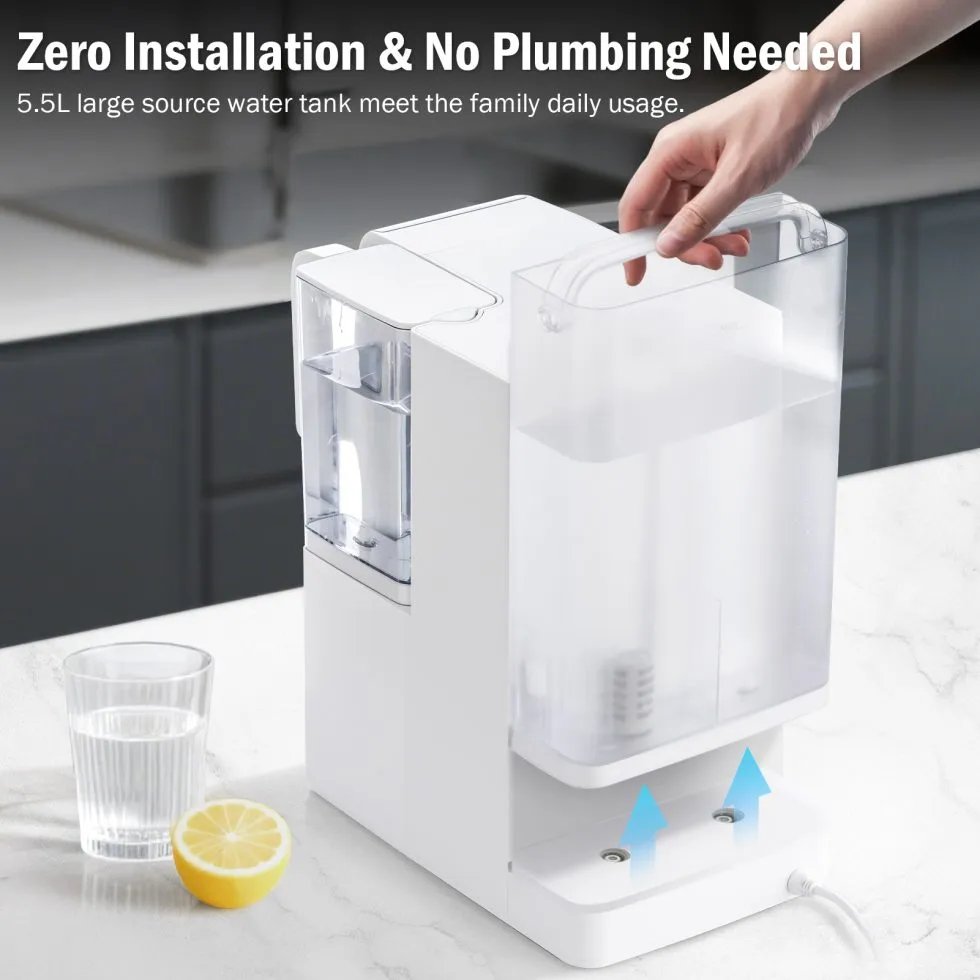
Excellent design, easy to operate; every small to medium workplace should install one.
-Daniel